Best Time to Take a Mediterranean Cruise: Weather and Crowds Guide
Best Time to Take a Mediterranean Cruise for Ideal Weather and Low Crowds
Embarking on a maritime journey across the Mediterranean Sea represents the pinnacle of travel for those seeking a profound blend of ancient history, diverse culinary arts, and sun-drenched coastal landscapes. Because the Mediterranean encompasses two distinct regions—the Western Mediterranean, highlighting Spain, France, and western Italy, and the Eastern Mediterranean, featuring the Adriatic coast, Greece, and Turkey—the environmental variables shift notably throughout the year. Selecting the optimal time frame to sail is the single most critical decision a traveler can make to ensure an uninterrupted and enriching experience.
The widespread appeal of Southern Europe means that peak operational seasons frequently collide with extreme climate conditions and intense tourist congestion. Travelers who overlook seasonal patterns often find themselves navigating popular historic sites during intense mid-summer heatwaves while contending with massive shoreside crowds. Shifting the travel calendar to target specific climatic and crowd-density sweet spots transforms a standard vacation into a well-timed, comfortable expedition. Understanding the nuances of Mediterranean weather loops and maritime inventory shifts allows you to curate a balanced and highly efficient timeline.
Mapping the Seasonal Cruising Windows Across Southern Europe
The traditional Mediterranean cruise calendar spans from early April through late November, a period defined by predictable maritime safety and open local economies. Within this multi-month operational envelope, the season splits into three distinct phases: the refreshing spring awakening, the high-demand summer peak, and the mellow autumn harvest window. Each block presents a radically different environment regarding daily temperatures, sea conditions, and localized port logistics.
The Spring Shoulder Sweet Spot
Sailing between mid-April and late May introduces travelers to a highly favorable environment characterized by comfortable daily temperatures and vibrant, blooming coastal landscapes. During these spring shoulder weeks, regional temperatures hover between 15°C and 23°C (59°F to 73°F), creating perfect conditions for intensive walking tours through exposed archeological sites like the Roman Forum or the ruins of Pompeii. The massive mid-summer crowds have not yet arrived, meaning transit times at major monuments are short and local shopkeepers are exceptionally welcoming.
From a geographic standpoint, spring is particularly magical for exploring the Greek Isles and the Andalusian coast of Spain, where fields are flush with colorful wildflowers. Sea conditions during these transitional months are generally stable, though occasional lingering winter breeze patterns can create slight motion on the water. The primary compromise of spring sailing involves seawater temperatures, which remain too cool for comfortable swimming or prolonged beach activities, making it a phase best suited for cultural exploration and historic discovery.
Navigating the Summer Peak and Autumn Transitions
July and August represent the numerical peak of the maritime season, driven by global school vacations and guaranteed cloudless skies. While these months deliver perfectly warm water temperatures ideal for swimming in the crystal-clear waters of the French Riviera or the Aegean Sea, they also introduce intense afternoon heat that frequently surpasses 35°C (95°F). Furthermore, Europe’s local holiday season coincides with these months, creating maximum congestion as international cruisers and domestic land tourists compete for space in narrow historic ports.
As the calendar transitions into September and October, the secondary shoulder season emerges as arguably the most balanced window for standard travelers. The intense heat of July and August breaks into a mellow warmth, while the Mediterranean Sea retains its absorbed summer heat, remaining warm enough for beach excursions. Autumn also ushers in regional harvest festivals, allowing passengers to experience authentic cultural traditions, local wine pressings, and olive harvests across rural Italy, Greece, and France without the frantic rush of summer crowds.
Harnessing Modern Maritime Innovations for Environmental Comfort
The integration of advanced architectural engineering and digital weather-tracking frameworks has changed how modern vessels interact with seasonal Mediterranean weather variations. These technological upgrades actively shield passengers from shifting weather patterns, ensuring consistent onboard comfort regardless of the sailing month.
Algorithmic Stabilization and Precision Meteorological Tracking
Modern mega-vessels utilize highly responsive hydrodynamic stabilization systems that project underwater fins from the hull to actively counteract roll motion caused by seasonal wind shifts. These automated systems continuously calculate wave impact data, adjusting the wing angles in milliseconds to reduce ship motion by up to ninety percent. This level of stability allows lines to confidently expand their sailing windows into the early spring and late autumn frames when the sea can occasionally become lively.
[Live Sea Wave Impact Data]
            │
            └──► [Algorithmic Hull Processing Center]
                        │
                        ├──► Real-Time Fin Angle Adjustment
                        ├──► Automatic Roll Counteraction
                        └──► Counter-Phase Ballast Shifting
                                    │
                                    └──► Smooth Vessel Transit (90% Motion Reduction)
Simultaneously, ships utilize advanced dual-Doppler radar networks and satellite-linked meteorological software to map regional microclimates in real time. If a sudden mistral wind pattern develops in the Gulf of Lion or a seasonal meltemi wind picks up across the Aegean Sea, navigation teams can adjust their transit speeds or slightly tweak routes. This proactive routing guarantees that guests can enjoy calm waters and predictable arrivals, even during the transitional shoulder seasons.
Advanced Climate Control Grids and Sustainable Propulsion
To handle the immense heat spikes of peak summer cruising, modern vessels utilize multi-zoned smart climate control grids. These digital networks monitor thermal load across individual sections of the ship, automatically routing cooling resources to high-occupancy areas like theaters, multi-tiered dining areas, and glass-domed solariums. Individual guest staterooms feature sensitive electronic thermostats that maintain stable temperatures, providing a cool sanctuary after a long day of exploring hot, sun-baked historic ruins.
On the environmental front, the newest generation of ships relies on cleaner power platforms, such as liquefied natural gas (LNG) propulsion and advanced hull coatings that minimize friction. These engineering updates reduce emissions and allow vessels to quietly enter protected historical waters and eco-sensitive archipelagos without disturbing local environments. By running operations with optimized fuel efficiency, cruise lines can maintain stable pricing across both peak and off-peak seasons, shielding travelers from shifting global energy costs.
Real-World Profile Models of Mediterranean Voyages
To better visualize how timing, itinerary selection, and vessel types interact across this region, let us look at specific real-world operational examples that demonstrate high-value travel configurations.
Western Mediterranean Cultural Circuit Ships
Insert image of the product format
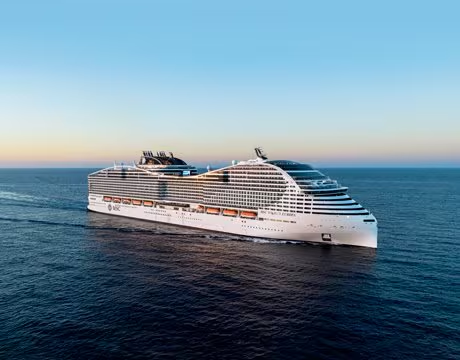
This profile centers on massive contemporary mega-ships that operate continuous, highly efficient loop itineraries through the iconic ports of Barcelona, Marseille, Florence, and Rome. These vessels are designed to act as fully integrated floating resorts, carrying extensive multi-generational entertainment options, multiple complimentary dining rooms, and expansive open-deck pool areas. They represent the ultimate introduction for first-time visitors to Europe who want to experience legendary landmarks with maximum structural support.
When deployed during the shoulder months of May or October, these vessels unlock incredible logistical value. Because they feature high passenger capacities, the internal economy of the ship remains stable, allowing them to offer very competitive introductory rates during off-peak weeks. The onboard infrastructure is heavily optimized for smooth shore transitions, deploying automated gangway systems and digital port-guides that allow thousands of passengers to disembark cleanly for excursions into historic Italian and Spanish city centers.
Adriatic and Dalmatian Coast Historic Vessels
Insert image of the product format
This framework features mid-sized, destination-focused vessels that navigate the narrow channels and historic walled cities of the Adriatic Sea, with primary stops in Venice, Split, Kotor, and Dubrovnik. Because these ships carry a smaller physical footprint than the industry’s largest vessels, they can bypass distant commercial industrial ports and dock directly alongside the ancient stone piers of medieval old towns. This gives passengers immediate pedestrian access to historic sites the moment they step off the ship.
Sailing this specific route during the month of September provides an unmatched balance of ideal weather and cultural depth. The intense summer tourist rush in Dubrovnik and Venice naturally tapers off, allowing for comfortable walking tours along historic stone battlements without fighting massive crowds. The mid-sized nature of these vessels fosters a quiet, sophisticated onboard atmosphere that highlights regional lecture series, local culinary integration, and scenic daytime cruising through dramatic coastal inlets like the Bay of Kotor.
Aegean and Greek Isles Island-Hopping Fleets
Insert image of the product format
This configuration leverages sleek, high-end vessels that specialize in intimate island-hopping routes through the Cyclades and Dodecanese archipelagos, routinely visiting Athens, Mykonos, Santorini, Rhodes, and Bodrum. These ships prioritize scenic open-air living, featuring expansive teak observation decks, outdoor dining verandas, and retractable marine platforms that allow guests to swim directly from the back of the vessel when anchored in sheltered coves.
Choosing early June for this type of voyage allows you to experience the Greek islands at their absolute aesthetic peak. The iconic whitewashed villages and blue-domed churches of Santorini are framed by bright, clear blue skies, while the afternoon sea breezes keep the island air fresh and comfortable. The focus of these lines is maximum immersion, frequently featuring late-night departures or overnight stays in port so passengers can fully experience the legendary evening culture and seaside dining scenes of the islands without feeling rushed.
Clear Advantages of a Structured Maritime Vacation
Choosing a well-timed Mediterranean cruise provides distinct practical and structural advantages over traditional, land-based multi-country European itineraries.
Complete Relief from Continental Transit Logistics
The single greatest practical advantage of a Mediterranean cruise is the total elimination of the heavy logistics that usually complicate multi-city European travel. On a traditional land vacation across Italy, France, or Greece, travelers must manage a complex puzzle of regional train tickets, flight bookings, rental car traffic rules, and continuous check-ins and check-outs at various hotels. This constant movement burns valuable vacation time and adds significant unexpected transit costs.
[European Multi-City Travel Frameworks]

Traditional Land-Based Tour:
Pack Bags ──► Train Station ──► Customs ──► Taxi ──► Check-in Hotel ──► Repeat Every 2 Days

Opaque Maritime Cruise:
Unpack Once ──► Sleep Comfortably ──► Ship Moves Overnight ──► Wake Up in New Country Daily
A cruise ship completely streamlines this process by serving as a luxury floating hotel that moves effortlessly between international borders while you sleep. You unpack your luggage exactly once in your stateroom and let the ship handle the thousands of miles of transit. This allows you to conserve your energy for exploring destinations, ensuring you step ashore each morning feeling completely refreshed and ready to discover a new city.
Predictable Financial Bundling and Capital Security
European tourism hubs are notorious for variable local pricing, shifting seasonal tax structures, and fluctuating currency exchange rates that can quickly exhaust a traveler’s liquid capital. Dining out three times a day in high-end destinations like Monaco, Mykonos, or positive-growth areas along the Italian Riviera can easily equal the daily cost of an entire hotel stay.
A cruise safeguards your travel budget by consolidating your core living expenses into a single, predictable upfront transaction. Your accommodation, daily multi-course meals, evening theater entertainment, and baseline transportation are all covered before you even leave home. This financial insulation lets you explore historic ports without the constant stress of calculating local restaurant taxes or overpaying at currency exchange kiosks, providing true peace of mind.
Resolving Critical Dilemmas in European Travel Planning
Opting for a cruise vacation elegantly solves several of the most common friction points, lifestyle limitations, and safety anxieties associated with international travel.
Eliminating Language Barriers and Personal Safety Stress
Navigating unfamiliar public transportation grids, deciphering regional train schedules, and coordinating transactions in multiple foreign languages can feel incredibly intimidating, especially for older travelers or first-time international explorers. The fear of getting lost or falling victim to common tourist pickpocketing schemes in crowded urban transit hubs can create underlying anxiety that ruins a trip.
Urban Land Transit:    [Crowded Train Stations] ──► Language Disconnect ──► High Security Stress
Coordinated Sea Tour:  [Secure Vessel Base]     ──► English-Speaking Staff ──► Total Peace of Mind
A Mediterranean cruise acts as a secure, English-speaking sanctuary that handles all the heavy lifting for you. Every shore excursion can be organized directly through the ship’s trusted network, ensuring you are guided by vetted, bilingual local experts who keep you safe and ensure you get back to the ship on time. After a busy day of exploring foreign-speaking cities, you return to a familiar environment where the crew speaks your language, the currency is predictable, and your security is thoroughly managed around the clock.
Balancing Divergent Desires in Group Travel
Planning a family trip that includes multiple generations—such as young kids, busy working adults, and retired grandparents—is often a major challenge. Adults might want to spend hours touring historic art museums, while children easily get bored with history and grandparents may require gentle, low-mobility walking paces. Forced to share a single land itinerary, someone is always compromising their vacation happiness.
A cruise ship solves this group dynamic by serving as a flexible, decentralized base camp. While history buffs spend the day on a deep-dive tour of ancient ruins, younger family members can enjoy supervised onboard youth clubs, sports courts, and water parks. The entire family can then gather effortlessly each evening at a shared dinner table to swap stories, ensuring everyone enjoys their dream vacation at their own pace.
Frequently Asked Questions
What happens if a passenger misses the ship’s departure time at a Mediterranean port?
If a guest is on an official shore excursion booked directly through the cruise line, the ship will automatically wait for the tour to return, or the line will arrange and pay for transportation to the next port at no cost to the guest. However, if a traveler explores independently and misses the all-aboard time, they are entirely responsible for handling and funding their own travel logistics, passport clearances, and transit to meet the ship at its next destination.
Is sea sickness common during Mediterranean cruises, and which areas are most active?
The Mediterranean is a mostly enclosed sea basin, meaning it is generally much calmer and smoother than the open Atlantic or Pacific Oceans. The smoothest sailing conditions consistently occur during the peak summer months of June, July, and August. For travelers who are highly sensitive to motion, booking a cabin located mid-ship and on a lower deck provides the most stable ride, as these areas experience the least pivot movement.
How do currency configurations work when visiting multiple countries on a single cruise?
The vast majority of Mediterranean cruise destinations—including Spain, France, Italy, Greece, and Malta—use the Euro, making cash transactions very straightforward across your route. In ports like Croatia or Turkey, major credit cards are universally accepted for small purchases, meaning you rarely need to carry local physical currency. On board the ship itself, all transactions are completely cashless, tracked via your room keycard, and billed directly to your credit card on file in your home currency.